
I spent so much time preparing to go to South Africa; time making sure that my mental state was positive, packing (or not over packing) appropriately. A great deal of the 30 days prior to departing to South Africa included self reflection, goal setting for the trip and mediation. My theory was simple: many born Americans that identify as Black do not always have the opportunity to visit the continent of Africa (although my educated guess would be that to have this opportunity would be beneficial mentally, spiritually and historic). I wanted to make sure that since I had the chance to do this study abroad; I took it very seriously to show up present, ready to learn in all environments (and not just the environments scheduled on our itinerary that were specific to schools, museums, etc), most importantly, I want to be sure that my heart was in a good place. The last was crucial to me, for my heart to be in a good place I need to ensure that I was grateful for everything — the food, the natives of the communities we visited, the interactions that we had, and the places that my eyes had the privilege of seeing. I did well with my preparation to South Africa. However, as the trip grew closer to its end, and it the time to depart back to the States arrived, I noticed that I lacked much preparation of returning back to the states after a transformational experience in South Africa.
The travel back to the States was extremely more difficult than the travel to South Africa. Traveling to South Africa was built on a foundation of excitement and wonderment; while the travel back to the States included exhaustion, jet-leg and a piece of feeling heartbroken.
Let’s expand on “Heartbroken”:
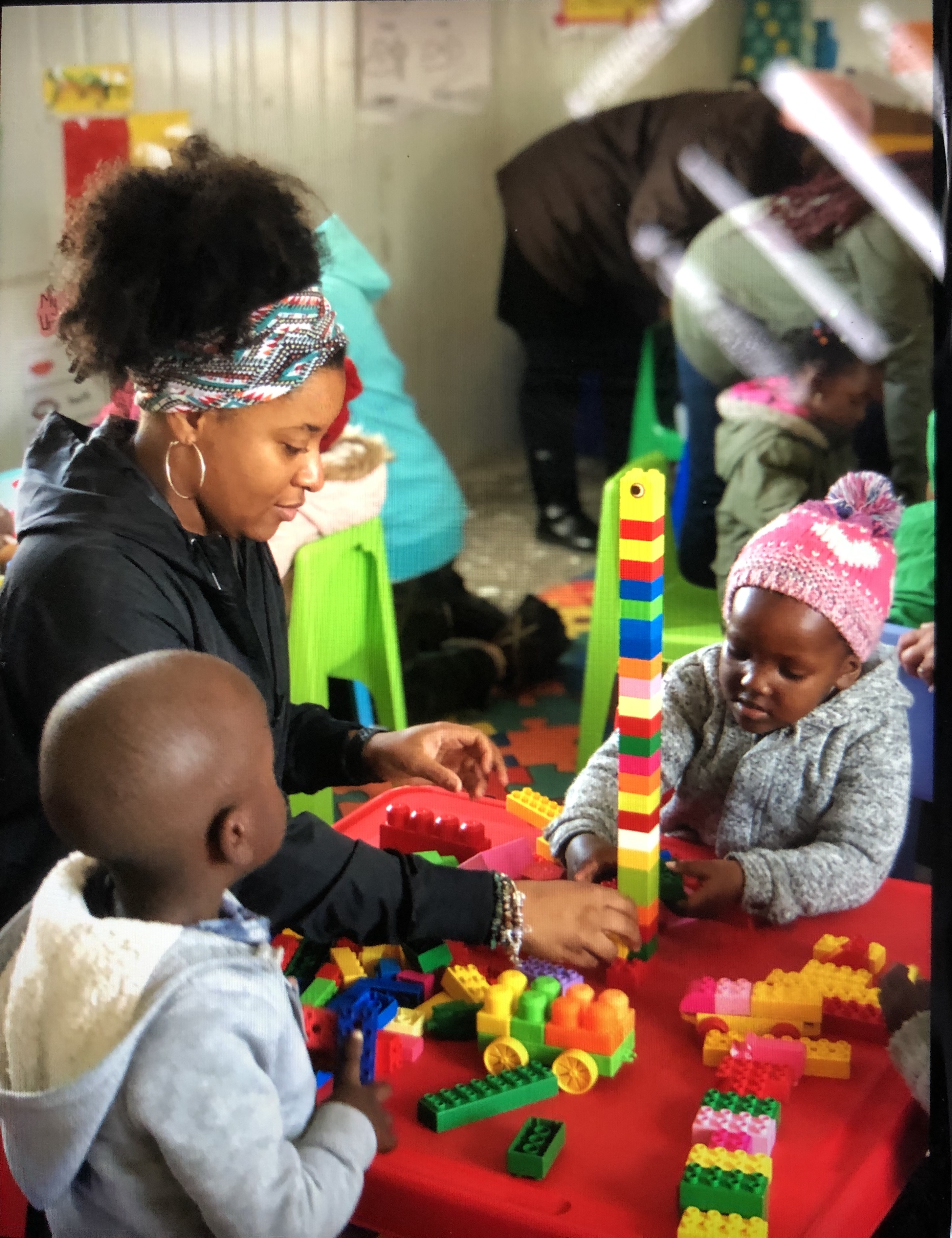
Spending 12 days in South Africa is just enough time to begin to feel slightly comfortable. Comfortable with the group you are traveling with, the place in which you are sleeping and the cultural differences that are around you. Yet 12 days is also just enough time to form a sense of attachment to all the things that made the experience rich. For an American woman that identifies as Black, part of this trip included unveiling parts of my own identity that hadn’t been discovered until stepping foot on the continent of Africa. You get the chance to confirm that wearing your hair natural and against the European standards that have been pushed toward you as a child and young adult is indeed necessary. You get comfortable with the liberating feeling that comes with eating without utensils and the warm feeling at smiling with strangers of the native lands (a gesture that most native Black Americans have been taught NOT to do). Then there’s the children that you interacted with along the way. The 12th grade students that laughed in commonality as we spoke about Jay-Z, Nas and J. Cole; or the head-student leaders who performed a song with an upbeat rhythm (reminding you of your childhood days when free-styling became the highlight of 3rd period lunch at Cass Technical High School in Detroit); and then there’s the little ones, the 4-year olds that you spent the day with running around in circles, reading stories to them as they grew anxious to see what would be revealed on the next page. The children of South Africa and seeing them in their school settings reminded me of my primary education, the uniforms I had to wear, the friends that I made, and the teachers that made a difference in my life even though I attend schools in a District where the system seemed to work more against us than for us.
To study post-apartheid is one layer, to study education in South Africa is another layer; but to study Education Post-Apartheid in South Africa is eye-opening, crushing, warm, disturbing and filled with love all at the same time. Even with my preparation prior to indulging in the rich experience, I could have never imagined the true encounters that took place during this moment. For me, the journey, and any journey is not just the action of participating in that moment; but the action of what happens afterwards. So here I am, concluding 12 days across the world traveling back to the States after an interaction with everything that includes South Africa and I am faced with the question: What do I do next? I never thought through what the possible answers could be beforehand. But there I stood, in the airport with my United States Passport in Johannesburg on July 21st 2019 trying to work through emotions as customs placed their stamp on my passport that said “Departure.” I was crushed, and for the first time ever, I finally knew the feeling of “Home is where the heart is.” My heart was with the children, the land, The Atlantic Ocean, the sweet smell and air, the food and the professionals that we met. My heart was embedded in the history, part of one side to the story, my story that I never knew. My heart remained in the land, the continent at large that left traces of culture, perspective and morals in my DNA, and my mother’s, my father’s, my grandparent’s and all of the generations that went before the family that I knew in Detroit MI, Burnt Corn, Alabama, and the borders of Virginia.
I spent the week after my return to the States at home, mostly in my bed. Partly trying to recover from the time change but mostly trying to internalize the memories, the lessons, and the actual fact that I had the opportunity to see such beauty and struggle. For the first few days, I cried. I cried because I was no longer there, then that turned into mix-emotions of my view of our current “American-Societal Dream” How we, Americans, seem to value material things and how material possession equates to power and privilege. And then my mind shifted to the communities in South Africa, some of which many material things did not exist. How they still smiled, how they still ate in what appeared to be happiness and love, how their hugs and their love felt real even despite their own pain and situations with the post-Apartheid environment. I spent my time during the first week of my return trying to figure out how to share my story (starting with these Blog Posts); attempting to do research on Journals that may publish my authentic qualitative narrative of a study aboard that has forever changed my life: Academically and most importantly, personally. I wrestled with the idea that the study aboard experience was suppose to do more work in shifting my academic perspective and to feel more change in my personal identity was selfish. Then I concluded with the idea that: In order to academically show up correct, one MUST personally be sound. Confident and not arrogant in their presence, able to stand over and over again in the face of unjust and unfair educational policies, procedures and standards that continue to exist in America, South Africa and other places across the globe. I sketched research ideas to put the facts behind the feelings, that if this was truly transformational for me; then it most have had a similar effect on my group mates.
After being back in the States for 18 whole days, I still think about Africa everyday. My desire to share grows bigger each day, leaving me at a current place where I wish to create a portion of the history curriculum in the previous high schools that I have worked with that includes education around Apartheid. What I know for sure is that students here in America are not learning about Apartheid, as they barely learn about the Trans-Atlantic Slave Trade. To provide them that opportunity would be fulfilling and a measure of paying it further. To collaborate with schools here in partnership with schools in South Africa, sharing resources, supplies and books. It’s not the fix, but it can be the start.
Although I may have returned back to the States, my work with South Africa and Africa at large is far from over. MARK MY WORDS!
Courtney Morris is a 2nd year Doctoral Student in Educational Leadership, her research focuses on Integrating Hip Hop Culture and Urban Education, as well as storytelling and using current events as teaching methods in the realm of Education. Courtney has a sub interest in leadership development among urban education and students of color, community development and mental health amongst black communities. Courtney obtained her Associates of Arts from Schoolcraft College, Bachelors of Science in Health Administration (concentration in Social Work), Masters of Arts in Higher Education/Student Affairs and Graduate Certification in Academic Advising. Feel Free to connect with Courtney via email at Connect@BeMentallyRich.com or via instagram at @MsCourtneyBrieAnn

 bementallyrich.com
One reply on “Re-Entering the States (The Mental journey back from South Africa)”
Wow, what a blessing to be able to visit South Africa! I’m glad you were not only able to visit, but that you found meaning in the trip…
LikeLike