Two years ago, I wrote to this very same topic, read more at: Emotional Strands.
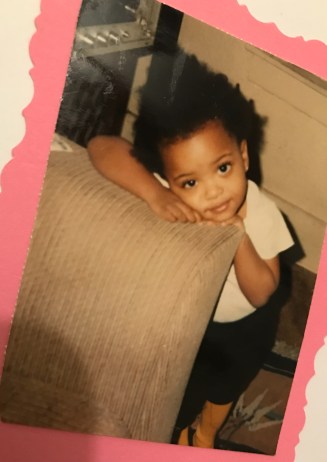 I remember my first relaxer, I was probably somewhere around the age of 9 and I begged my Moma to “Let me try it.” At that time, I didn’t quite grasp the theory of Black hair vs. European standards and where I fit on that continuum. All I knew is that I wanted to be FLY.
Fly included straight hair with curls that were installed by a flat iron. I wanted this relaxer because I knew that my curls would last longer if my hair was trained to be straight. My Moma let me get that relaxer and I loved it for what it was at that moment. When my hair was washed, no natural kinks appeared, just straight stringy hair strands. Blow drying became easy and the time it took from start to finish was cut in half. At that time, I thought I won!
It wasn’t until I reached 14 years old, the summer before entering high school, when the birth mark on my scalp had started to irritate and destroy the hair on the left side of my head. At the time, I was aware of this extra layer of what doctors explained as skin that sat on top of my scalp but it at never bothered me until the pinnacle of that teenage cycle of fitting in, looking good, and NOT being the weirdo (which by the way, what does that really mean? Who defines weird in the first place, I wonder!). That summer was a true disaster, when I should have been out with my middle school friends, enjoying the last days of middle school fun – I was confined to the house after having outpatient surgery at the dermatologist office. I was completely thrown off. I couldn’t look at food commercials or move too quickly without getting nausea, often times falling ill and my equilibrium or the lack thereof became the highlight of those 90 degree days.
In 2005, one year prior to my surgery and entry into 9th grade, India Arie shook the Black community. I grew up on India, my Moma would jam to her soulful music on weekends and every opportunity we had in the car. I knew that when India sung, she spoke from a place that connected her to the universe and us to our internal-beings. She dropped the song “I am not my hair”. At that moment in my life, little 13 year old Courtney received a seed which planted a thought that would blossom into something much bigger than myself. Something related to my own Black identity became triggered when I heard that song, even though I did not act on it until umpteen years later. What resonated most to me about this song was the lyrics and the unapologetic expression that Black hair is versatile. Even in the wake of unjust treatment because of our natural kinks and curls. India told the story that our hair in corporate America, western society and against European standard of beauty – was our choice and if we so choose, its natural state should, rightfully so, be respected. After the traumatic experience (that until now has been kept mostly private) with my surgery and hair chronicles at the brink of 9th grade, I kept India’s message at the back of my mind. My surgery and recovery required a big chop. This involuntary chop played on my confidence as a 9th grader and the pressures of “girl talk” in the hallways. I internalized those feelings and pushed forward. Ironically, with much care from my stylist (who still does my hair to this day) my hair magically grew back.
I never got another relaxer and eventually those chemicals (lye and other unhealthy particles) grew out. But I continued to keep my hair straight out of comfort and routine. It would take years to grow a sense of love, appreciation and determination to mingle internally and externally with the natural pattern of hair strands that would grow from my crown. Overtime, I built my own relationship with my hair. I began exploring zillions, box braids, summer twist-outs and wash/gos. Now that I look back, Auntie India’s message never left my side.
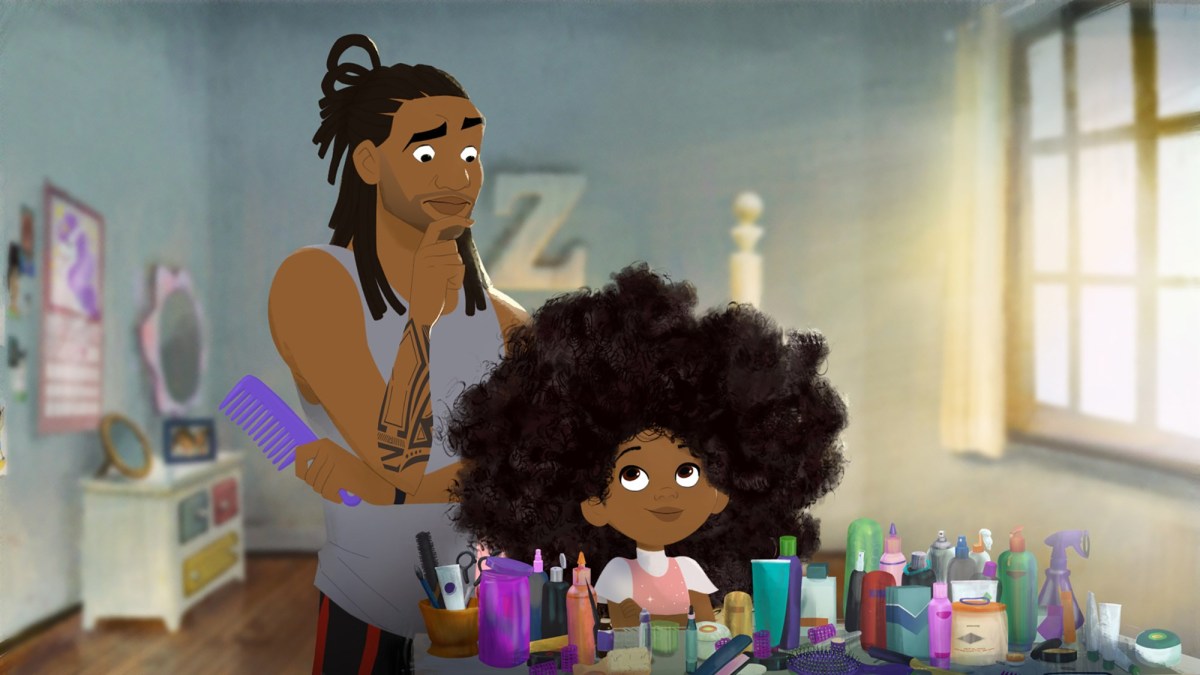
Today, 15 years removed from my own personal hair encounter and the song that planted public display of accepting Black hair, Matthew Cherry reminds us all, through creative literature and animation that Black hair is indeed beautiful.
As I grew within my own identity, my mother grew within her own. But Matthew’s narrative promotes at a very young age to little Black girls and boys through his book, Hair Love and Oscar winning short film that compliments the literature, it is indeed and most certainly crucial to express outwardly that our hair has, is and will always be a beautiful marker of our own destined beauty. His expression normalized, the same way India did, Black hair and ultimately self-love. Rather you decide to wear your hair straight, install bundles, rock braids or protective styles, or be free with your natural curls with a wash and go, let us remember that we have the privilege to decide. We have the opportunity to do whatever we so choose and even when society frowns upon our creative swagged out hair do’s, we have the power and magic to write our own narrative that highlights the versatility of our own right in Black beauty. As a little girl, I wanted my hair trained so I could fit into a box that was labeled “society says this is correct”, years laters I recognized that my very existence alone was never meant to fit into a box. My queens and kings, this is true for you as well. Rest in that!
Courtney Morris is a 2nd year Doctoral Student in Educational Leadership, her research focuses on Integrating Hip Hop Culture and Urban Education, as well as storytelling, using current events and media as teaching methods in the realm of Education. Courtney has a sub interest in leadership development among urban education and students of color, community development and mental health amongst black communities. Courtney obtained her Associates of Arts from Schoolcraft College, Bachelors of Science in Health Administration (concentration in Social Work), Masters of Arts in Higher Education/Student Affairs and Graduate Certification in Academic Advising. Feel Free to connect with Courtney via email at Connect@BeMentallyRich.com or via instagram at @MsCourtneyBrieAnn

 bementallyrich.com