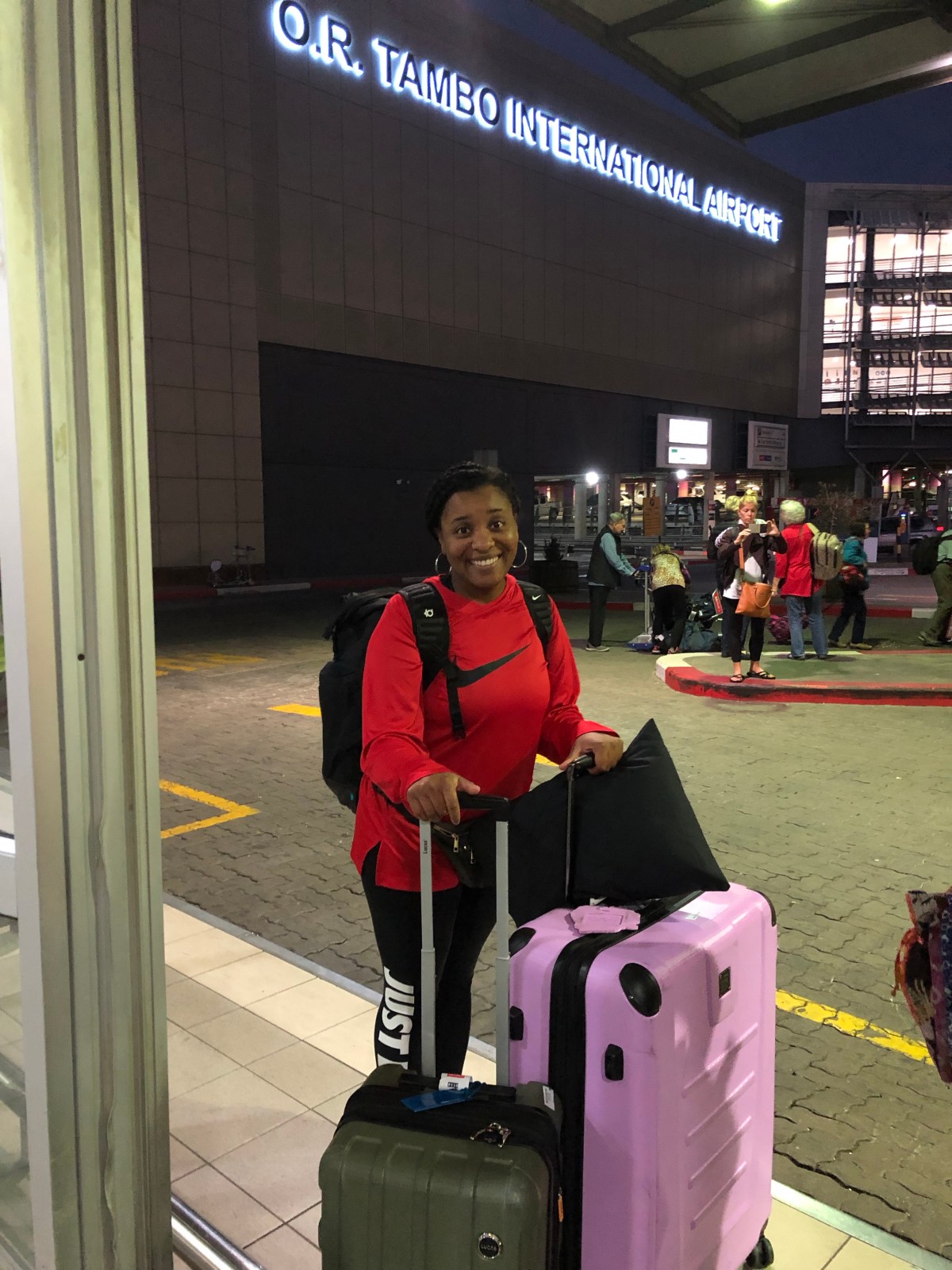
I was nervous! Like first love nervous. Like meeting a family member for the first time nervous. Or even the nervous feeling that you used to get that sits at the bottom of your stomach before you had to take that test at school. I was nervous to meet her. What stood between us was the time to navigate through the airport, customs, and baggage claim.
I thought I prepared myself for this interaction, but the truth of the reality is that there was no actual proper way to prepare for this engagement that stood before me.
All of my life, I’ve learned about Africa. The place & the land that my family’s linage was taken from. I’ve read countless books, looked at countless maps and have tried to trace back as accurately as possible where we come from.
Blacks in the United States have been considered the lost people. We know, even if it remains deeply rooted in us, that somehow and someway we have been displaced. This study abroad experience to Africa is one that I have looked forward to for a long time, even before I knew it was possible. It was deeper than the surface meaning of the trip.
For me, it was also an opportunity to get as close to home as possible. Even though I still have no clue: what village, what tribe or group of people my blackness is rooted from. I know that my encounter with Mother Africa was as close as I would probably get to “home” in my lifetime.
Our Arrival was a journey. Three flights and over 24 hours of traveling. The journey begin on Tuesday July 10th when I departed from my family at Detroit Metro Airport. My mother and I shared tears as I gave her and my brother one final hug. What she told me still remains very clear in my memory: You are going for yourself, for me, your father, your brother, your aunts, and your grandparents. Soak it all in, pay attention to it all. Somewhere down the line, those are your people. Those are our people. We are them and they are us.
From there, I traveled to Chicago and sat in the airport processing the fact that prior to one year ago, I never knew if visiting Africa would be in my reach. The idea to visit has always been a desire, however, the logistics to make it happen nearly felt impossible.
There I was, Chicago international airport as a 27 year old Ph.D student. I boarded the plane and we took off to Dubai. From Dubai our journey was another 8 hours as we boarded yet another plane that would take us into Johannesburg. Exhaustion set in somewhere between Chicago and our final destination in South Africa. Sleep for 24 hours felt nearly impossible and the closer we flew to our final destination, the more excited and nervous I started to feel.
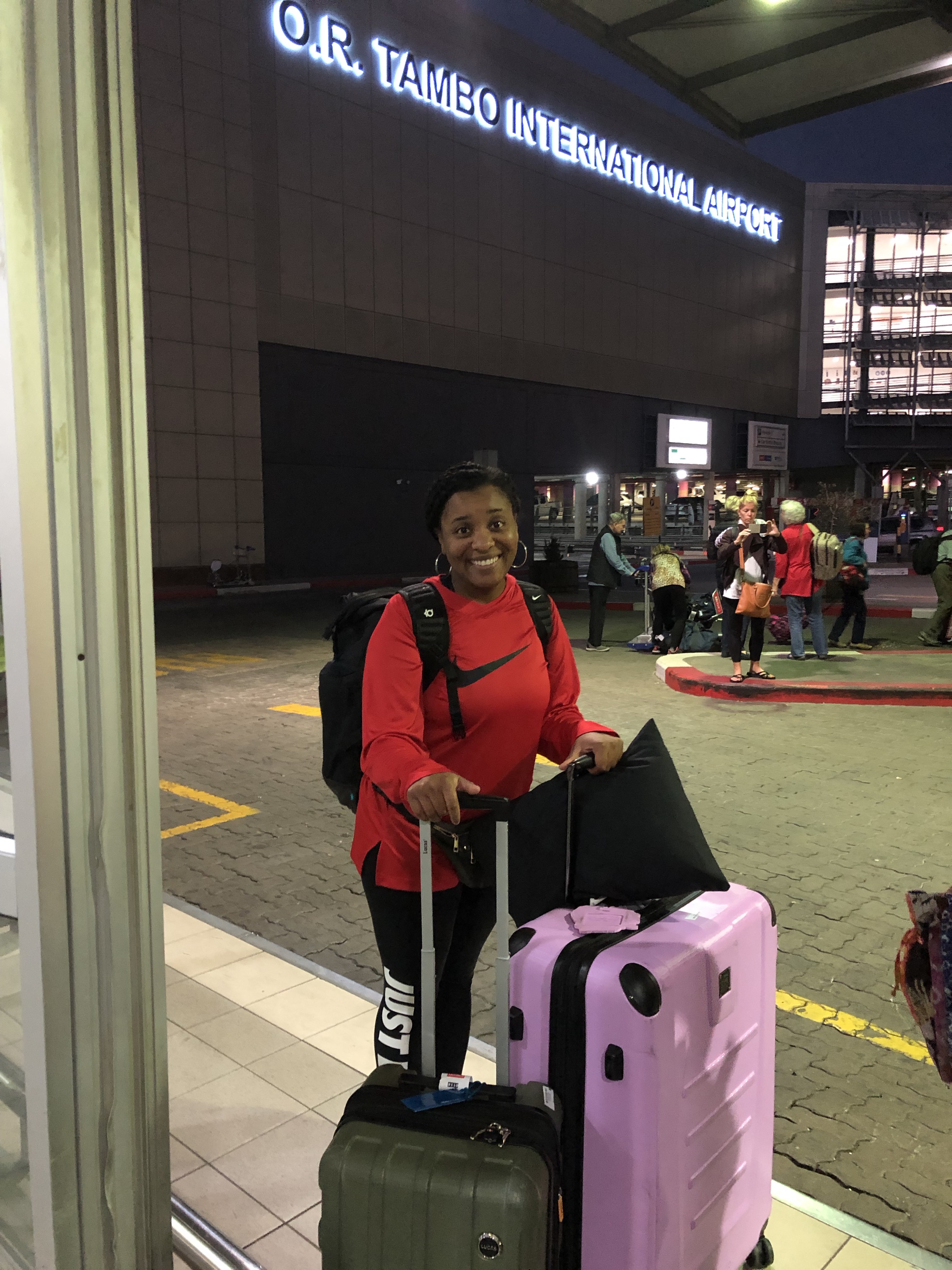
Our flight landed on the sweet soil, around 5:00am Thursday morning. We walked off the plane and as we navigated the travel through the airport, I couldn’t help but feel humbled and blessed to have this opportunity.
Our day started quickly, we traveled from the airport to Hotel Apollo. Met with a very sweet and what we would call southern hospitality back in the states. Apollo Hotel welcomed us with a warm smile.
Our first stop was a township called Soweto. A place with rich history and pain.
A pain very similar to many circumstances of the past with Blacks in the United States. The township of Soweto and the story of Hector Pieterson will remain a conscious memory as I continue to work with students of color, specifically Black students through the education system in America.
In 1973, Hector became an iconic student leader that paved the way and brutally lost his life during the beginning of the Apartheid Movement. When processing my learnings of Hector and the effects of education during the Apartheid error I couldn’t help but to think of the LA Riots, Detroit Riots and many of the young people who stood front line during protest and unfair, injustice environments that disregarded and disrespected the Black body. I couldn’t help but to think of my young brother who one day will grow to reach the age Hector was when he lost his life fighting for a fair and equal right to decent and inclusive education.
I couldn’t help but to think, even in the states where school districts are publicly yet silently segregated, leaving Black and Brown students in schools with no resources, no funding and often times administrators who make decisions for but don’t share the same identity, struggle or lack of privilege as the students they serve that beg for the right to learn equally —uninterpreted!
The decision to solely use the Africkaans language (a language created and used by white South Africans) caused an uproar from students who felt that the forcing of the language symbolized control from a government that cared nothing about who the students, community and native people were but everything about power and privilege that gave them the right to make decisions that did not serve its majority population in its best interest.
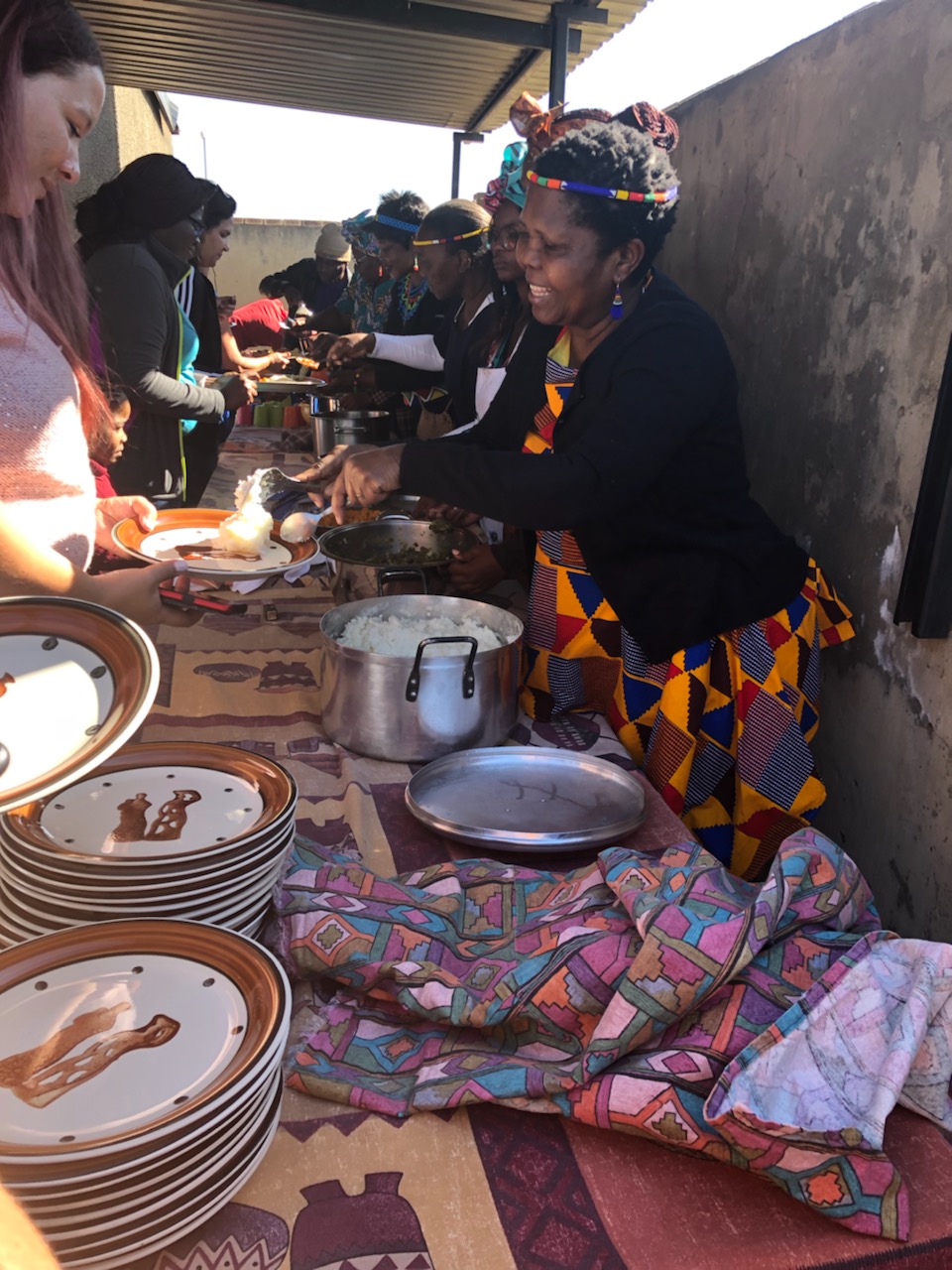

We had lunch with a group of local South African Soweto citizens, and I must add that the experience felt like a family reunion. The food, cooked fresh and by hand prepared by the beautiful women who reminded me of my aunts and older cousins. They taught us how to eat with our hands, which felt internally amazing to counter act the standards of what I have been conditioned to consider proper in United States.
The Apartheid Museum was an emotional and overwhelming experience. You hear about injustices all across the world from your own comfort spaces but to walk through a well thought out educational environment that explains thoroughly the horrid times of the past, that still shines its results in the present is quiet remarkable. Speechless is the only word, I will forever carry the overwhelming history of my brothers and sisters that experienced the apartheid in South Africa.
Courtney Morris is a 2nd year Doctoral Student in Educational Leadership, her research focuses on Integrating Hip Hop Culture and Urban Education, as well as storytelling and using current events as teaching methods in the realm of Education. Courtney has a sub interest in leadership development among urban education and students of color, community development and mental health amongst black communities. Courtney obtained her Associates of Arts from Schoolcraft College, Bachelors of Science in Health Administration (concentration in Social Work), Masters of Arts in Higher Education/Student Affairs and Graduate Certification in Academic Advising. Feel Free to connect with Courtney via email at Connect@BeMentallyRich.com or via instagram at @MsCourtneyBrieAnn

 bementallyrich.com